

The HappiNest method
Where does happiness live? In the moments we share.
You don't need more time – you need a different quality of attention. 10–20 minutes a day that brings parent and child closer together.
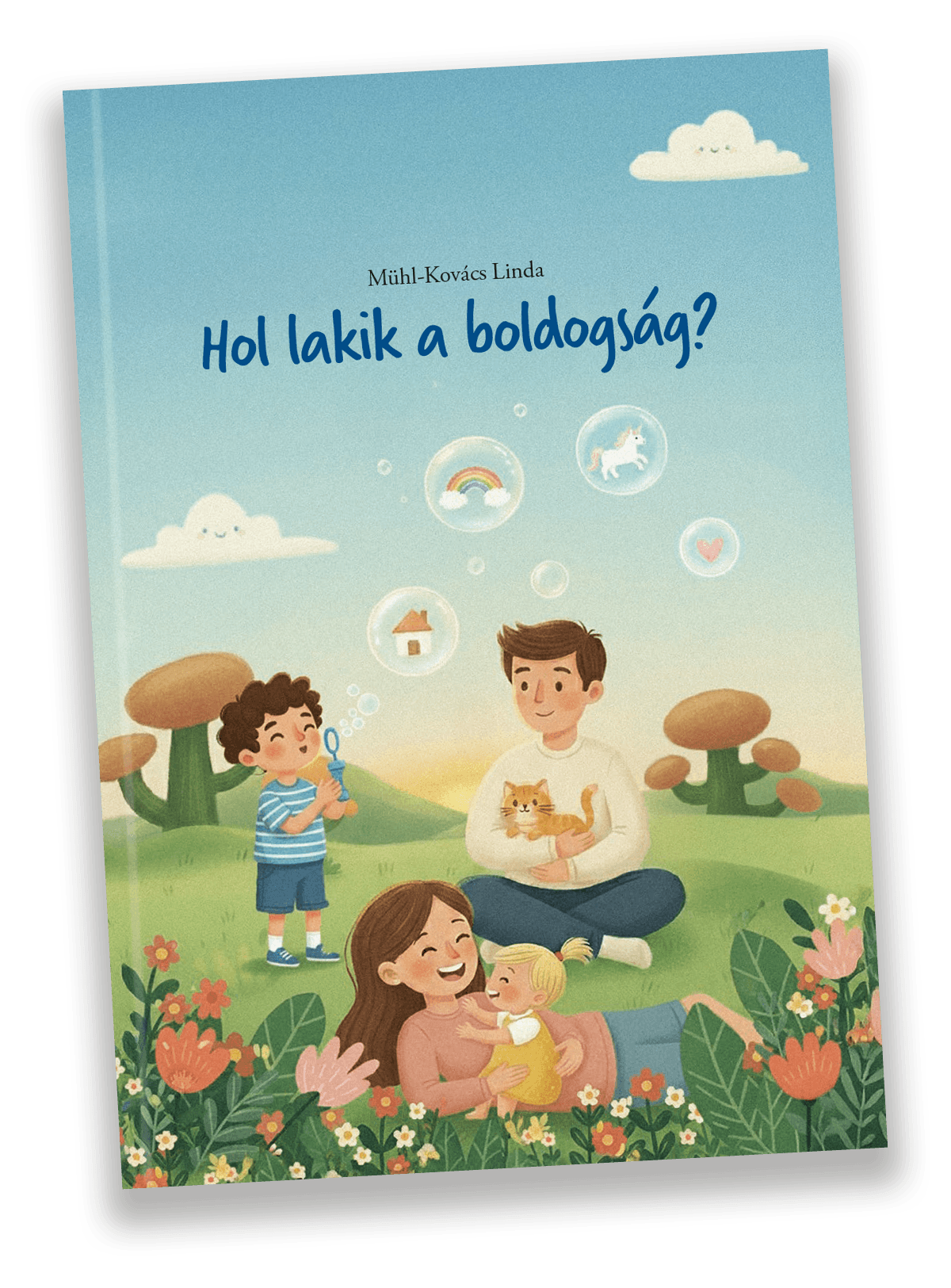
Happiness is not a pink haze, it's experiencing reality well.
Happiness is a learnable way of functioning that takes shape in childhood. This book doesn't give rigid rules, it points the way across the 7 key areas of happiness, without guilt or pressure to conform.
First you. Then the two of you, together.
Part 1 – For you.
Strengthens your own inner balance, presence and harmony: a 21-day programme + 2 key practices you can use anytime (breathing, meditation).
Part 2 – For you both.
Then the two of you set out to explore together. Through stories and play the child (ages 2–6) learns to regulate emotion, and gains safety and confidence: 9 “lifebuoy” exercises + a 12-day shared programme.
What does the book give you?
Together, not separately.
First it strengthens you, then connects you with your child through shared, playful exercises.
Small steps, without guilt.
Every exercise has a minimum version; as much as you can manage is enough.
Not a parenting tip – a shared skill.
The child learns through story and play; the two of you grow together.
A tangible framework.
7 areas, a 21-day on-ramp, repeatable afterwards. The measure is always “a snapshot, not a diagnosis”.

The happiness rainbow – 7 areas, 21 days.
We group the habits that shape our happiness into 7 areas, like the colours of the rainbow: responsibility, awareness, mental health, lovingness, physical health, purpose, environment. The 21-day programme builds on these, in small daily steps.
- Felelősségvállalás
- Tudatosság
- Lelki egészség
- Szeretetteljesség
- Testi egészség
- Céltudatosság
- Környezet
Take a look inside.
See what the book is like inside – illustrated spreads from the adult and the children's parts.
What others say about it
A special book that speaks to parents and children at once, helping them discover the secrets of happiness in a playful way. The book doesn't just convey theoretical knowledge but helps parents develop their children's emotional intelligence while they themselves set out toward a happier life.
In my view the reader holds a much-needed book. Beyond containing theoretical knowledge, its practical “guide” is unique. I recommend it to every parent who wishes to experience balanced, harmonious time together, and to give the child positive provisions that benefit them into adulthood. I hope every mindful parent who wants to raise their child toward happiness recognises the book's value and applies what it suggests!
Who is this book for?
- Parents raising a child aged 2–6.
- Those who seek not more time but better-quality presence.
- Those who think in permissive, small steps instead of guilt.
- Those who want to grow together with their child, through shared experiences.

Who is Linda?
Linda Mühl-Kovács is a mother of young children, a yoga, relaxation and meditation teacher, a children's yoga teacher and a wellbeing ambassador. Physical and mental wellbeing and inner happiness are close to her heart. She is the creator of the “Where does happiness live?” method and of HappiNest.
Start today.
Frequently asked questions
Is 10–20 minutes a day really enough? Our days are very full.
Yes, and then some! Every practice also has a “minimum version” of just a few minutes. The goal isn't to squeeze another programme into the calendar, but to fill the evening or daytime minutes you already have with real presence.
What should I do if my child just isn't in the mood?
We never force it. The method builds on the parent's example and on playfulness. If you start the practice or the story, your child will join in out of curiosity. If not today, then tomorrow or next week, just don't give up. Consistency and the parent's example matter.
What if I have more than one child (say a 3- and a 5-year-old)?
The stories and playful practices work wonderfully with several children at once; in fact they also strengthen the sibling bond and the shared experience.
Do I need the app alongside the book?
The book is a complete experience on its own. The app is a convenient digital support (for tracking progress and the rainbow wheel, for example), but it isn't required for doing the practices.
How does the author know this really works?
Linda Mühl-Kovács is a communications professional, wellbeing ambassador, trained yoga, children's yoga and meditation teacher and, most importantly, a mother. The methodology wasn't born behind a desk but in the everyday life of her own family (and those around her). Linda combined her own parenting experience with recognised research foundations (the theories of Diener, Seligman, Csíkszentmihályi and the Blue Zones). Her credo: happiness is a consciously learnable way of functioning, acquired most effectively in shared parent-child connection.
Let's stay in touch
HappiNest newsletter
A few practical ideas each month for shared, connected moments – no spam, no guilt.